Showing posts with label ready mix concrete. Show all posts

Thursday, January 23, 2014

Functions of Various Ingredients

Functions of Various Ingredients

Cement is the binding material. After addition of water it hydrates and binds aggregates and the surrounding surfaces like stone and bricks. Generally richer mix (with more cement) gives more strength. Setting time starts after 30 minutes and ends after 6 hours. Hence concrete should be laid in its mould before 30 minutes of mixing of water and should not be subjected to any external forces till final setting takes place.

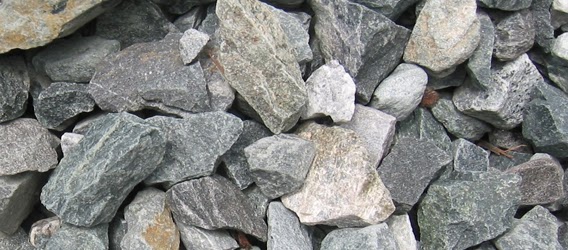
Coarse aggregate consists of crushed stones. It should be well graded and the stones should be of igneous origin. They should be clean, sharp, angular and hard. They give mass to the concrete and prevent shrinkage of cement. Fine aggregate consists of river sand. It prevents shrinkage of cement. When surrounded by cement it gains mobility enters the voids in coarse aggregates and binding of ingredients takes place. It adds density to concrete, since it fills the voids. Denser the concrete higher is its strength.


Water used for making concrete should be clean. It activates the hydration of cement and forms plastic mass. As it sets completely concrete becomes hard mass. Water gives workability to concrete which means water makes it possible to mix the concrete with ease and place it in final position. More the water better is the workability. However excess water reduces the strength of concrete. The variation of strength of concrete with water cement ratio. To achieve required workability and at the same time good strength a water cement ratio of 0.4 to 0.45 is used, in case of machine mixingand water cement ratio of 0.5 to 0.6 is used for hand mixing.

Saturday, January 18, 2014

Objects of foundations

Objects of foundations

Every structure consists of two parts. (1) Foundation and (2) Super structure. The lowest artificially prepared parts of the structure which are in direct contact with the ground and which transmit the loads of the structure to the ground are known as Foundation or Substructure. The solid ground on which the foundation rest is called the “foundation bed” or foundation soil and it ultimately bears the load and interacts with the foundations of buildings.

Objects of foundations

Foundations are provided for the following purposes.
1.                        To distribute the total load coming on the structure on large area.
2.                        To support the structure.
3.                        To give enough stability to the structures against various distributing forces such as wind, rain etc.
4.                        To prepare a level surface for concreting and masonry work. The general inspection of site of work serves as a good for determine the type of foundation, to be adopted for the proposed work and in addition, it helps in getting the data w.r.to the following items.

    i.            Behavior of ground due to variations in depth of water table.
ii.            Disposal of storm water at site.
iii.            Nature of soil by visual examination.

iv.            Movement of ground due to any reason etc.

Thursday, January 9, 2014

Concrete Compaction - Methods

   Concrete Compaction - Methods
Concrete Compaction - Methods
Concrete should be placed and compacted immediately after mixing. The concrete should be placed within 30 to 40 minutes to prevent the danger of concrete getting its initial set, before laying the concrete, the shuttering should be cleaned of all of dust or debris. Crude oil or grease etc is usually applied to the shuttering before concreting to prevent the shuttering absorbing the water from the concrete or getting stuck to it. In placing the concrete, care should be taken to see that it should not be thrown from heights. Concrete should be laid in layers 15 to 30 cm (6” to 12”) in thickness and each layer should be properly compacted before laying the next one.

Compaction of concrete should be proceed immediately after placing. The function of compaction of concrete is to expel the air bubbles in the mass and make it impermeable in addition to its securing the desired strength. The concrete mass should be consolidated or compacted till the cream of the cement starts appearing on the surface. Over compaction may lead to segregation of concrete while-under-compaction may leave air voids in concrete and results in honey combing. Compaction may be done by hand or mechanical device.

Hand compaction : The hand compaction may be done by rodding, tamping or hammering. Tamping is usually adopted for compacting concrete for slabs or other such surfaces. Rodding is done for thin vertical members. Hammering is done for massive plain concrete works and for compacting an almost dry concrete the surface is beaten with heavy flat bottom rammers till the thin film of mortar start appearing on the surface.


Mechanical compaction: Mechanical compaction is done by the use of vibrators. Vibrators are of three types 1. Internal 2. External 3. Surface. Internal vibrators are commonly used in large works for flat surface compaction. In this the vibrator is immersed in the full depth of concrete layer. The vibrator should be kept in one position for about 3 minutes and then removed and placed another position. External vibrators are placed against the form work and are only adopted for thin section of members or in places where internal vibrators cannot be used with ease. Surface vibrators are generally employed in concrete road construction. Compaction of concrete by use of vibrators permits the use of stiff concrete mix of high strength and ensure better compaction than that obtained by the method of hand compaction

Monday, December 30, 2013

Characteristics of sand

 Characteristics of sand
Characteristics of sand

·     It should be chemically inert
·     It should be clean and coarse. It should be free from organic matter.
·     It should contain sharp, angular and durable grains.
·     It should not contain salts, which attract the moisture from atmosphere.

·  It should be well graded (i.e.) should contain particles of various sizes in suitable proportions.

Wednesday, December 11, 2013

Bricks

Bricks
Bricks
Bricks are obtained by moulding clay in rectangular blocks of uniform size and then by drying and burning these blocks. As bricks are of uniform size, they can be properly arranged, light in weight and hence bricks replace stones.
Composition Manufacture Process.
Composition – Following are the constituents of good brick earth.
Alumina : - It is the chief constituent of every kind of clay. A good brick earth should contain 20 to 30 percent of alumina. This constituent imparts plasticity to earth so that it can be molded. If alumina is present in excess, raw bricks shrink and warp during drying and burning.
Silica -A good brick earth should contain about 50 to 60 percent of silica. Silica exists in clay either as free or combined form. As free sand, it is mechanically mixed with clay and in combined form; it exists in chemical composition with alumina. Presence of silica prevents crackers shrinking and warping of raw bricks. It thus imparts uniform shape to the bricks. Durability of bricks depends on the proper proportion of silica in brick earth. Excess of silica destroys the cohesion between particles and bricks become brittle.
Lime– A small quantity of lime is desirable in finely powdered state to prevents shrinkage of raw bricks. Excess of lime causes the brick to melt and hence, its shape is last due to the splitting of bricks.
Oxide of iron - A small quantity of oxide of Iron to the extent of 5 to 6 percent is desirable in good brick to imparts red colour to bricks. Excess of oxide of iron makes the bricks dark blue or blackish.
Magnesia - A small quantity of magnesia in brick earth imparts yellow tint to bricks, and decreases shrinkage. But excess of magnesia decreases shrink leads to the decay of bricks.
The ingredients like, lime, iron pyrites, alkalies, pebbles, organic matter should not present in good brick earth

Monday, December 9, 2013

Aggregates as Building & Construction Materials

Aggregates as Building & Construction Materials
Aggregates - Grading: Aggregates is derived from igneous, sedimentary and metamorphic rocks or is manufacture from clays, slag etc. The properties of concrete are directly related to those of its constituents and should be hard, strong, durable, and free from clay, loam, vegetables and other such foreign matters. The presence of clay or dirt coating prevents the adhesion of cement on the surface of aggregates and ultimately retards the setting and hardening of cement and reduces the strength, durability and soundness of concrete. Depending upon their size, the aggregates are classified as (i)Fine Aggregative (ii) coarse aggregates.

Fine Aggregates: The material, most of when passes through 4.75mm I.S. sieve size, is termed as fine aggregates. It should not contain more than 1 to 8% of fine particles, which may be obtained from sea, river, lake or pit may be used as fine aggregates but care should be taken all its impurities must be removed.


Coarse Aggregates: The material whose particles are of such size as are retained on 4.75mm, I.S sieve are called coarse aggregates. The size of the coarse aggregates used depends upon the nature of work. The maximum size may be 23mm for mass concrete such as dams etc. and 63mm for plain concrete. Crushed hard stone and gravel is the common materials used as coarse aggregates for structural concretes. Coarse aggregates usually obtained by crashing granite, gneiss, crystalline lime stone and good variety of sandstone etc.

Monday, December 2, 2013

Stone

Crushed Stone
Crushed Stone
All the building structures are composed of different types of materials. These materials are either called building materials or materials of construction. It is very essential for a builder, may be an architecture or engineer or contractor, to become conversant thoroughly with these building materials. The knowledge of different types of material, their properties and uses for different purposes provides an important tool in the hands of the builders in achieving economy in material cost. The material cost in a building ranges 30 to 50 percent cost of total cost construction. In addition to material economy, the correct use of material results in better structural strength, functional efficiency and esthetic appearance.

Classification of Rocks:
Building stones are obtained from rocks occurring in nature and classified in three ways.

1. Geological classification
2. Physical classification
3. Chemical classification

Geological Classification:
According to this classification, the rocks are of the following types.
Igneous rocks: Rocks that are formed by cooling of Magana (molten or pasty rocky material) are known as igneous rocks. Eg: Granite, Basalt and Dolerite etc.
Sedimentary rocks: these rocks are formed by the deposition of production of weathering on the pre-existing rocks. Examples: gravel, sandstone, limestone, gypsum, lignite etc.
Metamorphic rocks. These rocks are formed by the change in character of the pre-existing rocks. Igneous as well as sedimentary rocks are changed in character when they are subject to great heat and pressure. Known as metamorphism. Examples: Quartzite, Schist, Slate, Marble and Gneisses.

Tuesday, November 26, 2013

Material Required for Ready Mix Concrete

Material Required for Ready Mix Concrete

Admixture: A substance added to the basic concrete mixture to alter one or more properties of the concrete; ie fibrous materials for reinforcing, water repellent treatments, and coloring compounds.

·     Air-entraining admixtures (mainly used in concrete exposed to freezing and thawing cycles)
·     Water-reducing admixtures, plasticizers (reduce the dosage of water while maintaining the workability)
·     Retarding admixtures (mainly used in hot weather to retard the reaction of hydration)
·     Accelerating admixtures (mainly used in cold weather to accelerate the reaction of hydration)
·     Super plasticizer or high range water-reducer (significantly reduce the dosage of water while maintaining the workability)
·     Miscellaneous admixtures such as corrosion inhibiting, shrinkage reducing, coloring, pumping etc.

Aggregate: Inert particles (i.e. gravel, sand, and stone) added to cement and water to form concrete.

Cement: Dry powder that reacts chemically with water to bind the particles of aggregate, forming concrete. Portland cement is typically used in concrete production.


Fly ash: Fly ash is a by-product from coal-fired electricity generating power plants. The coal used in these power plants is mainly composed of combustible elements such as carbon, hydrogen and oxygen (nitrogen and sulfur being minor elements), and non-combustible impurities (10 to 40%) usually present in the form of clay, shale, quartz, feldspar and limestone.

Sunday, November 10, 2013

Information to be Supplied by the Producer

Information to be Supplied by the Producer
The Ready Mix Concrete supplier must provide the following information to the consumer if and when requested:
·     Nature and source of each constituent material including the name of the manufacturer in case of branded products like cement, admixtures etc.
·     Proportion of quantity of each constituent per CuM of fresh concrete.
·     Generic type of the active constituent of the chemical admixture and its solid content.
·     Chloride content in all constituent materials.
·     Compatibility of cement and chemical/mineral admixtures.
·     Compatibility of admixtures with one another when more than two types of admixtures are proposed.
·     Initial and final setting time of concrete when admixture is used.
·     Details of plant and machinery (capacity CuM/hr), storage (CuM) availability, type of facilities to dose admixtures, type of moisture measurement arrangement, type of mixer, rated capacity (CuM/min.) of the mixer.
·     Availability of number of transit mixers and their capacities.
·     Details of last calibrations done on various weighing /dosing equipments
·     Testing facilities available at RMC plant

·     Capacity and type of concrete pump and placing equipment available (if required).

Sunday, November 3, 2013

Sampling of Concrete

Sampling of Concrete

Critical decisions, often involving very high potential costs, are made on the basis of concrete test results. Correct sampling is paramount to the validity of these test results but is an aspect of testing that is frequently overlooked and often carried out by untrained people. It is therefore essential that the sampling is done correctly and is representative of the concrete delivered.

After the truck-mixer has re-mixed its delivery on site allow at least the first one-third of a m3 of concrete to be discharged prior to taking any samples. Take at least 4 incremental samples from the remainder of the load avoiding sampling the last cubic meter of concrete. Thoroughly re-mix this composite sample either on a mixing tray or in the sampling bucket and proceed with the required testing.

Describe the recommended sampling methods for ready mixed concrete in British code. Using a standard scoop, this can collect about 5kg of normal weight concrete. Each load of concrete to be tested should be nominally divided into a number of scoopfuls.

The Standard method: To ensure that the concrete is representative of the whole load is standard sample consists of scoopfuls taken from at least four different parts of the load and collected in buckets. The scoopfuls should be taken at equally spaced intervals; the scoop being passed through the whole width and thickness of the stream in a single movement. The first and the last 1/6th
portion of the discharge should be disregarded as unrepresentative. This is then thoroughly re-mixed on a non-absorbent surface before carrying out any individual test. This operation is necessary to even out any variation between individual scoopfuls and to counteract any segregation that may have occurred in transporting the sample from the sampling point to the testing area.

The Alter native Method: An alternative method of sampling concrete for slump testing from
a truck-mixer before the majority of the load has been discharged is permitted. This enables the concrete to be tested before being placed. When this alternate method is used, an initial discharge of at least 0.3 m3 is made before a sample of six scoopfuls is collected from the
moving stream; The sample is then r e-mixed on a non-absorbent surface and split into two equal parts. Each part is then tested or slump, with the average of the two tests recorded as the test result. This method of sampling is only applicable to the slump test. Concrete sampled by this method must not be used to make cubes for compliance testing, as it will produce erroneous results.


Sunday, September 1, 2013

Ready Mix Concrete

Ready Mix Concrete
Ready Mix Concrete
Ready Mix Concrete is a specialized material in which the cement aggregates and other ingredients are weigh-batched at a plant in a central mixer or truck mixer, before delivery to the construction site in a condition ready for placing by the builder. Thus, `fresh' concrete is manufactured in a plant away from the construction site and transported within the requisite journey time. The RMC supplier  provides two services, firstly one of processing the materials for making fresh concrete and secondly, of transporting a product within a short time.

Sometimes Materials such as water and some varieties of admixtures can be transit-mixed (also known as Transit Mixture), that is they can be added to the concrete at the jobsite after it has been batched to ensure that the specified properties are attained before placement. Here materials are batched at a central plant and are completely mixed in the Batching Plant or partially mixed intransit. Transit-mixing keeps the water separate from the cement and aggregates and allows the concrete to be mixed immediately before placement at the construction site (Dry Concrete). This method avoids the problems of premature hardening and slump loss that result from potential delays in transportation or placement of central-mixed concrete.

Additionally, transit-mixing allows concrete to be hauled to construction sites further away from the plant. There are several types of RMC plants varying in type of mixing and capacity of concrete production.

Saturday, August 31, 2013

Heating, ventilation and air conditioning (HVAC)

Heating, ventilation and air conditioning (HVAC)

HVAC systems directly influence productivity through the health of the occupants and so are a major factor in the operation of both the building and business. This has been achieved both by the introduction of improved direct digital control (DDC) technology, distributed processing and more adaptive spatial planning in general. Systems have been developed that deliver HVAC using both the traditional approach, where the ducting is installed in the plenum space and air is directed downward, and in floor-ducted systems that supply air in an upward direction. Personal environmental control systems that integrate technologies to deliver cooling/heating to the individual are also available and are impacting greatly on the development of future HVAC systems.
The distribution of control zones and hence the number of zones that can exist on each floor is aligned with the type of HVAC system used (Table). This may pose difficulties if a broad distribution of functional zones is created in the process of providing the desired work places, thus limiting the opportunity to align building system control zones with

Table: Attributes and types of HVAC systems used in intelligent building
HVAC attribute
·     Horizontal distribution: air, water, none
·     Horizontal distribution: ceiling, floor, furniture supply/return
·     Environmental load management and load balancing
·     Split ambient and task conditioning: individual controls
·     All air systems and mixed mode systems
·     High performance systems
·     Air quality management and energy management
·     Chilled ceilings

·     Geothermal ground water systems

Saturday, August 24, 2013

Concrete Curing Period

Concrete Curing Period
The curing period must be designed so that the areas near the surface achieve the structural strength and impermeability required for durability of the concrete, and corrosion protection of the reinforcement.
Strength development is closely connected to the concrete composition, fresh concrete temperature, ambient conditions, concrete dimensions and the curing period required is influenced by the same factors.

As part of the European standardization process, standardized European rules are being prepared for concrete curing.

The principle of the European draft is incorporated in E DIN 1045-3. Its basis is that curing must continue until 50% of the characteristic strength fck is obtained in the concrete component. To define the necessary curing period, the concrete producer is required to give information on the strength development of the concrete. The information is based on the ratio of the 2 to 28 day average compressive strength at 20°C and leads to classification in the rapid, average, slow or very slow strength development range. The minimum curing period prescribed according to E DIN 1045-3 is based on these strength development ranges. The table below shows the minimum curing period as a factor of the strength development of the concrete and the surface temperature.

Thursday, August 22, 2013

Concrete Curing Methods

Concrete Curing Methods

Protective measures against premature drying are:
·     Applying liquid curing agents
·     Leaving in the forms
·     Covering with sheets
·     Laying water-retaining covers
·     Spraying or “misting” continuously with water, keeping it effectively submerged and
·     A combination of all of these methods

Liquid curing agents can be sprayed onto the concrete surface with simple tools (e.g. low pressure, garden type sprayers). They must be applied over the whole surface as early as possible: on exposed concrete faces immediately when the initial “shiny” surface of the fresh concrete becomes “matt”, and on formed faces immediately after striking. It is always important to form a dense membrane and to apply the correct quantity (in g/m²) as specified, and in accordance with the directions for use. Several applications may be necessary on vertical concrete faces.

Leaving in the form means that absorbent timber formwork must be kept moist and steel formwork must be protected from heating (i.e. by direct sunlight) and from rapid or over-cooling in low temperatures.


Careful covering with impervious plastic sheets is the most usual method for unformed surfaces and after striking of formwork components. The sheets must be laid together overlapping on the damp concrete and fixed at their joints (e.g. by weighing down with boards or stones) to prevent water evaporating from the concrete.

Wednesday, August 21, 2013

Concrete Curing

Concrete Curing
Concrete Curing
For high durability, concrete must not only be “strong” but also impermeable, especially in the areas near the surface. The lower the porosity and the denser the hardened cement paste, the higher the resistance to external influences, stresses and attack. To achieve this in the hardened concrete, measures have to be taken to protect the fresh concrete, particularly from
·     Premature drying due to wind, sun, low humidity etc.
·     Extreme temperatures (cold, heat) and damaging rapid temperature changes
·     Rain
·     Thermal and physical shock
·     Chemical attack
·     Mechanical stress

Protection from premature drying is necessary so that the strength development of the concrete is not affected by water removal. The consequences of too early water loss are:
·     Low strength in the parts near the surface
·     Tendency to dusting
·     Higher water permeability
·     Reduced weather resistance
·     Low resistance to chemical attack
·     Occurrence of early age shrinkage cracks

·     Increased risk of all forms of shrinkage cracking

Sunday, August 18, 2013

Sulphate resistant Sprayed Concrete

Sulphate resistant Sprayed Concrete
A sprayed concrete with a standard cement content of 400–450 kg/m³ has high sulphate resistance when it uses:
·     Cement combined with water reducer
·     a standard Portland cement combined with water reducer and added at > 5% or
·     a CEM III-S

Requirement: w/c < 0.50
Recommended mix design for wet sprayed concrete:
·     Granulometry                         0–8 mm

·     Cement content                        425 kg/m³        

Saturday, August 17, 2013

Steel Fiber reinforced Sprayed Concrete

Steel Fiber reinforced Sprayed Concrete
Definition

Steel fiber reinforced sprayed concrete, like conventionally reinforced sprayed concrete, consists of cement, aggregates, water and steel. By using and adding steel fibers, the sprayed concrete is homogeneously reinforced. 
Reasons for using steel fiber reinforced sprayed concrete:
·     Saving on the costs for installation of steel mesh reinforcement
·     Reduction in slump due to higher early strengths
·     Elimination of “spray shadow” when spraying onto reinforcing mesh
·     Due to its homogeneity, steel fiber reinforced sprayed concrete can withstand forces of various kinds in various directions at any point on its cross-section. 
Additional notes:
·     The cement content may have to be increased because the fines content of steel fiber reinforced sprayed concrete must be higher than in standard wet sprayed concrete, to anchor the fibers.
·     Adding Silica fume helps to achieve the target values of the sprayed concrete because it also improves anchorage of the fibers.
·     improves the pump ability considerably.

·     The minimum diameter of the pump line should be at least double the maximum fiber length.

Thursday, August 15, 2013

Test Methods of Sprayed Concrete

Test Methods of Sprayed Concrete
Determination of early strengths
To determine the very early strengths (in the range 0 to 1 N/mm²), the Proctor or Penetrating needle is used.
The following methods are well established for compressive strength testing between 2 and 10 N/mm²:
·     Kaindl/Meyco: Determination by the pull-out force of bolts.
·     HILTI (Dr. Kusterle): Determination of the impression depth (I) and pull-out force (P) of nails shot with a HILTI DX 450L shot bolt machine (load and nail size are standard).

·     Simplified HILTI method (Dr. G. Bracher, Sika):Determination of the impression depth (I) of nails shot with a HILTI DX 450L shot bolt machine (load and nail size are standard). Determining the required early strength by this method should be accurate to ±2 N/mm².

Wednesday, August 14, 2013

Concrete Spraying Process

Concrete Spraying Process
Dry spray process 
In the low build dry spray process (blown delivery), the semi dry (earth moist) base mix is pumped using compressed air, then water is added at the nozzle together with an accelerator (as required) and this mixture is spray applied.

The inherent moisture content of the aggregates in the base mix should not exceed 6%, as the effective flow rate is greatly reduced by clogging and the risk of blockages is increased.

Cement content
For 100 liters dry mix
28 kg of cement is added to 80 liters of aggregate.
For 1250 liters dry mix
350 kg of cement is added to 1000 liters of aggregate.

Wet spray process
There are two different wet spray processes, namely “thin” and “dense” stream pumping. In the thin stream process, the base concrete is pumped in a dense stream to the nozzle with a concrete pump, then dispersed by compressed air in a transformer and changed to a thin stream. The accelerator is normally added into the compressed air just before the transformer. This ensures that the sprayed concrete is uniformly treated with the accelerator.
With thin stream pumping, the same base mix is pumped through a rotor machine, as with dry spraying, with compressed air (blown delivery). The accelerator is added through a separate attachment to the nozzle with more compressed air.

Assuming that the same requirements are specified for the applied sprayed concrete, both processes – dense and thin stream application –require the same base mix in terms of granulometry, w/c, admixtures, additives and cement content.

Monday, August 12, 2013

Depth of Penetration of Water under Pressure

Depth of Penetration of Water under Pressure
Principle
Water is applied under pressure to the surface of hardened concrete. At the end of the test period the test specimen is split and the maximum depth of penetration of water is measured.
Test specimens
The specimens are cubes, cylinders or prisms with a minimum edge length or diameter of 150 mm.
The test area on the specimen is a circle with a 75 mm diameter (the water pressure may be applied from above or below).
Conditions during the test
·     The water pressure must not be applied on a smoothed/finished surface of the specimen (preferably take a formed lateral area for thet est). The report must specify the direction of the water pressure in relation to the pouring direction when the specimens were made (at right angles or parallel).
·     The concrete surface exposed to the water pressure must be roughened with a wire brush (preferably immediately after striking of the specimen).
·     The specimens must be at least 28 days old at the time of the test.
Test
During 72 hours, a constant water pressure of 500 (±50) kPa (5 bar) must be applied.
The specimens must be regularly inspected for damp areas and measurable water loss.
After the test the specimens must be immediately removed and split in the direction of pressure. When splitting, the area exposed to the water pressure must be underneath.
If the split faces are slightly dry, the directional path of penetration of water should be marked on the specimen.

The maximum penetration under the test area should be measured and stated to the nearest 1 mm.